
MotiZone case study

Project Overview
Problem Statement
Gen Z students often have strong connections online but desire deeper, more meaningful relationships in the real world, which can lead to mental fatigue.

MotiZone solution
MotiZone is a community website/app with the main goal of helping and inspiring Gen Z to be more motivated to create deeper connections outside the online space.
Safe. Motivational. Quiet.
Research Key Points
- 46% of Gen Z digital and real world personalities differ
- 53% feel more comfy talking online rather in person
- Easier to communicate online
- Anxious about interests
Interviews
I wanted to clearly understand the impacts of social media on Gen Z’s lives and how it could affect future generations. Interviews amongst university students aged 19–23 was made to gain insight based on research.
Key questions:
- Digital Habits & Trust
- Social media content & connections
Interview answers
-
‘short attention span, lack of information, stealing content’
-
“It’s like clearly some videos just can’t be turned into long form content. – but like and the other end we have short form content that it’s really just made just to like gauge as much interaction as possible, it’s not really there to like try be properly entertaining, if that makes sense”
-
‘online is just a much easier. There’s like dedicated communities towards that when it’s in real life, you don’t really have as many people you can talk to about sort of things. So you kind of have to either learn how to talk about different things, like converse about different things’
-
I think it’s harder to find people who have the same interests and hobbies as me in person. With Online all I have to do is go through my favourite apps and games and people who use the same apps as me and share my interests will be way easier to find. Plus there’s a lot more people online from around the world. It’s kind of like convenience. Kind of like, a filter.
-
‘Social media has a lot of different opinions that have gotten me confused sometimes. There are many topics that are controversial and so many people have conflicting arguments that it’s hard to tell what to think. I can get quite overwhelmed’
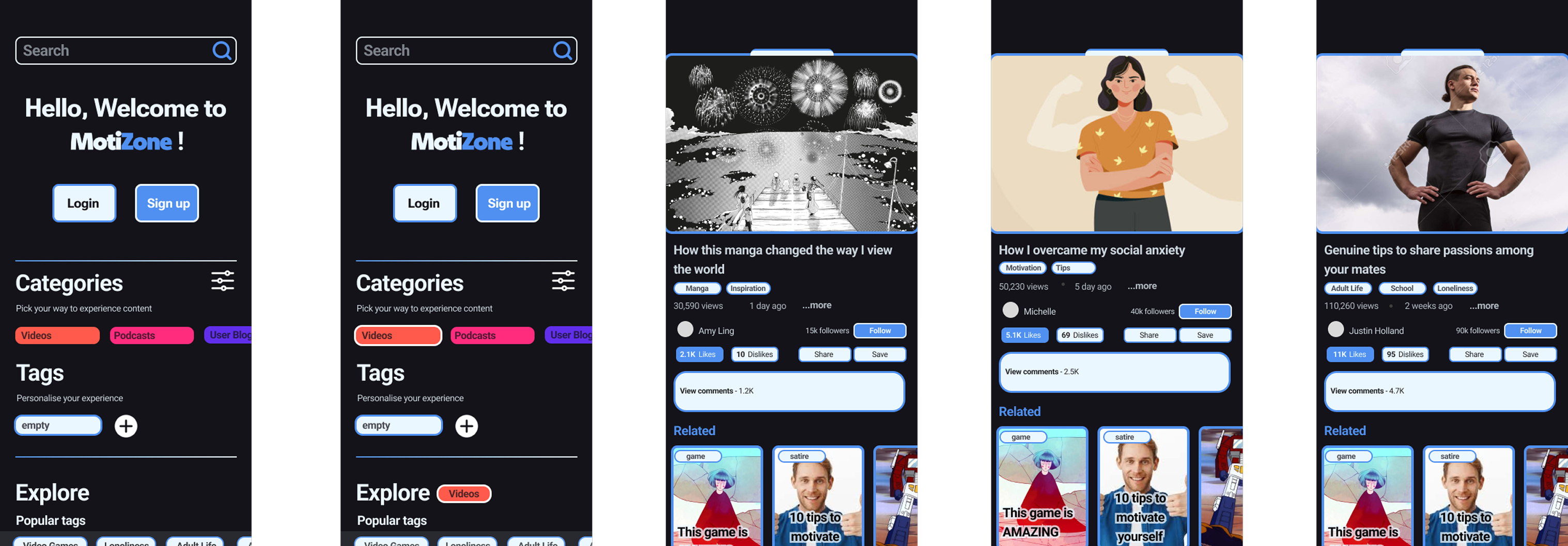
Initial prototype
User testing
A Prototype of MotiZone was made on Figma for a user test for Gen Z students ages 19–20. The main goal was to navigate the app using filters & viewing a video.
Key features includes filters for various types of content and a insight button to help get users outside the online space.
Feedback
Confusing filters
- users found content and tags to be similar
Layout
- A lot of prominent ui elements which lead to confusion
Mobile
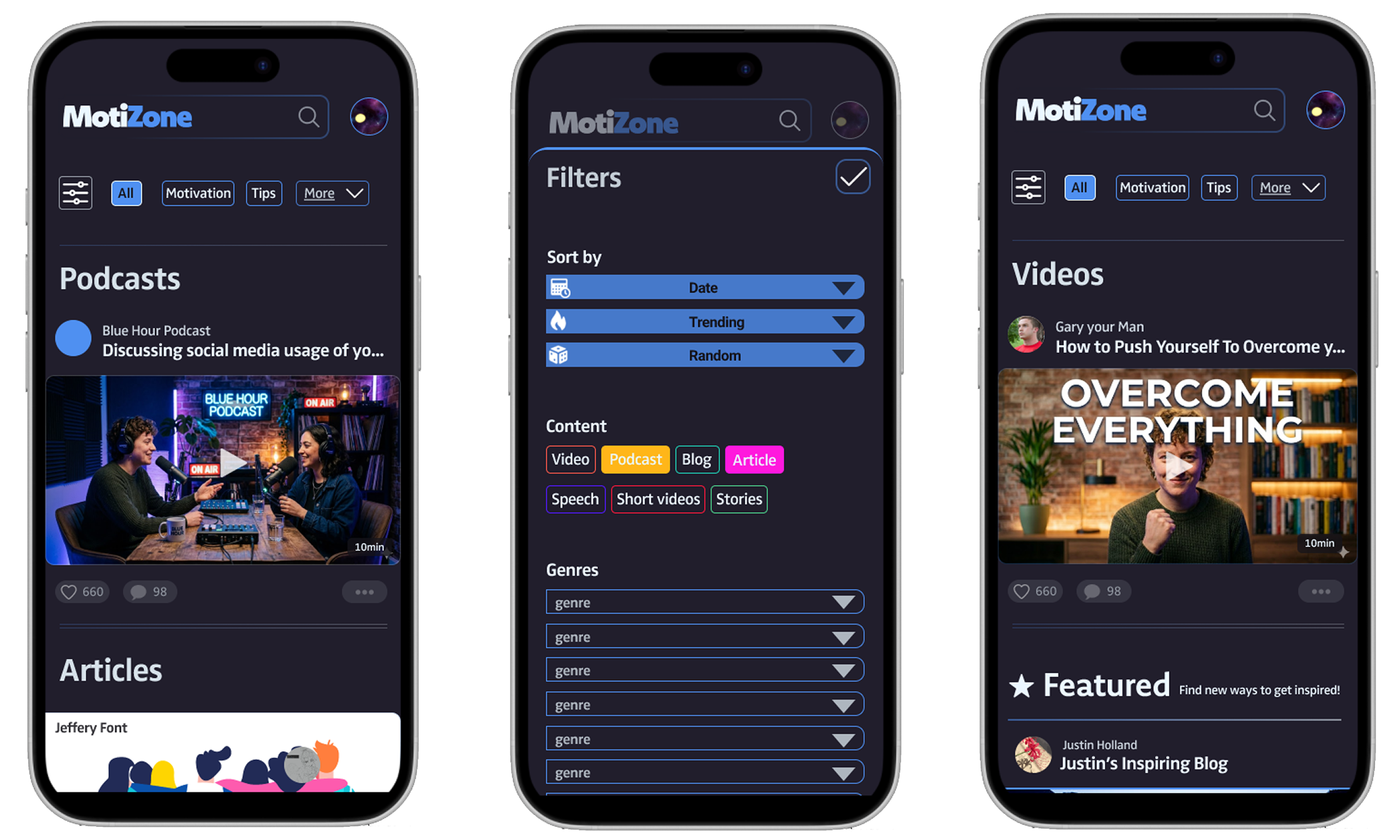
Simplified filter
- Simplified filters
- Users can sort content by filter
Simpler layout
- Less prominent elements
- Use of sections for each content category
- Use of more negative space
- Less darker background
AI was used in generating thumbnail images.
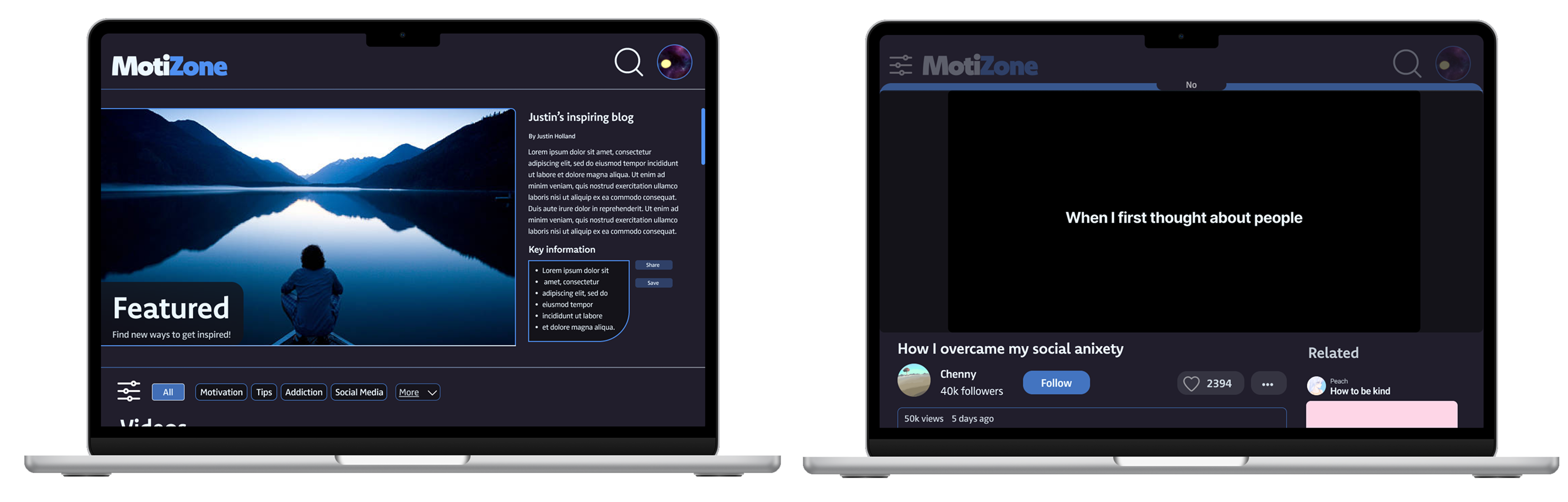
Desktop
Reflection
Through user interviews, I gained deep insights into the genuine struggles Gen Z faces when trying to connect both online and in real life. Additionally, user testing highlighted just how critical visual hierarchy and intuitive navigation are to the overall user experience, specifically showing that colour choices and layout directly impacts user engagement.